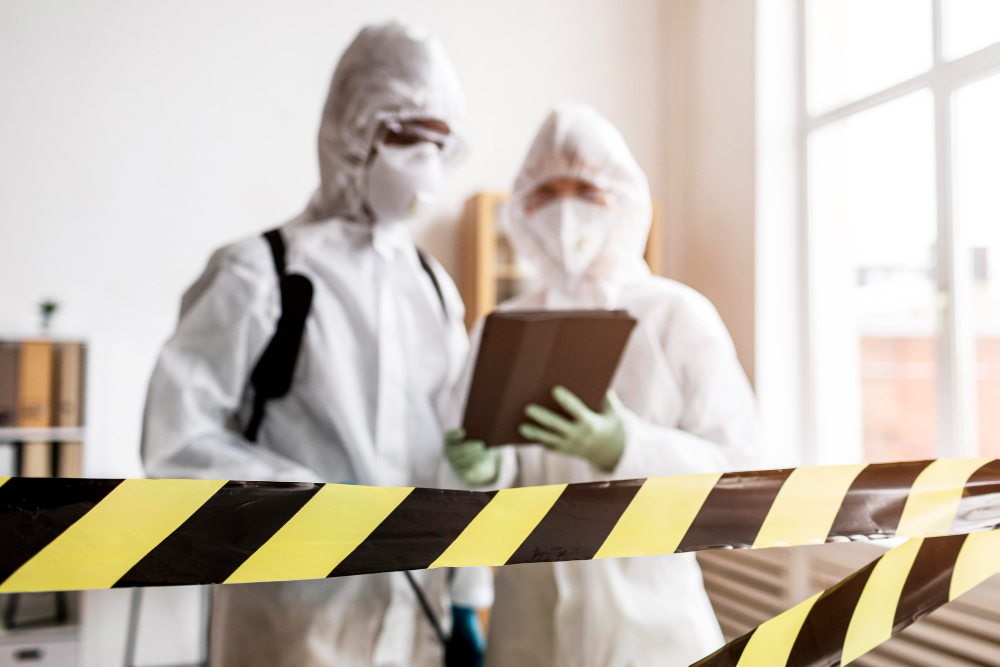
A biohazard incident can happen with little warning. A workplace accident involving blood, a discarded needle, bodily fluids, human waste or a serious trauma incident can quickly create risks for employees, visitors, and anyone responsible for cleaning the area.
The priority is not to get the workplace back to normal as quickly as possible. It is to protect people, contain the contamination and make sure the incident is dealt with safely.
This guide explains what a UK business should do after a biohazard incident at work, from the first few minutes through to professional cleaning, waste disposal and supporting employees who may have been exposed.
First Response: Protect People and Secure the Area
The first priority following any biohazard incident is human safety.
Hannah from Lily’s Ladies Cleaning Services says “Do not allow employees to begin cleaning simply because the contamination appears minor.” Blood and other bodily fluids can present biological risks, while needles and other sharps can cause injuries as well as potential exposure to bloodborne viruses.
Isolate the Affected Area
Prevent unnecessary access immediately.
Depending on the location, this could mean closing a room, cordoning off part of a warehouse or preventing access to a toilet, office or communal area.
The aim is to stop people walking through contamination and transferring it elsewhere on footwear, equipment or clothing.
Deal With Injuries and Exposure First
Anyone who has been injured or exposed should receive appropriate first aid and medical advice.
For a needlestick or similar sharps injury, NHS guidance recommends encouraging the wound to bleed gently, washing it with running water and soap, and covering it with a waterproof dressing. The wound should not be scrubbed or sucked.
Splashes to the eyes or mouth should be rinsed thoroughly with water.
Where exposure to blood or bodily fluids has occurred, the individual should seek prompt medical advice through the appropriate workplace occupational health service, NHS service or emergency department depending on the circumstances.
Assess What Has Happened
Once immediate risks to people have been addressed, determine what type of contamination you are dealing with.
Identify the Biohazard
Possible workplace biohazards include:
- Blood and blood-contaminated materials
- Vomit, urine, faeces and other bodily fluids
- Needles, syringes and other discarded sharps
- Human tissue
- Contaminated PPE or clothing
- Waste associated with an unattended death or trauma incident
The level of risk depends on what has happened, the quantity of contamination, how widely it has spread and whether anyone has been directly exposed.
Look Beyond the Visible Spill
One of the biggest mistakes is assuming that visible contamination represents the full extent of the problem.
Liquids can penetrate carpets, underlay, floor joints, furniture and other porous materials. Contamination can also be transferred onto door handles, equipment and surrounding surfaces.
A professional assessment may therefore identify affected areas that are not immediately obvious.
Understand Your Health and Safety Responsibilities
UK employers have duties under the Health and Safety at Work etc. Act 1974 to protect employees and others who may be affected by their activities.
The Control of Substances Hazardous to Health Regulations 2002 (COSHH) are also relevant where employees could be exposed to biological agents that may cause harm.
Review the Risk
Businesses whose activities create foreseeable exposure to biological agents should already have suitable risk assessments and control measures.
Following an incident, those assessments should be reviewed.
Ask:
- Why did the incident happen?
- Who was potentially exposed?
- Did existing controls work?
- Was suitable PPE available?
- Did employees know how to respond?
- Could contamination have spread beyond the immediate area?
The answers can identify improvements that reduce the likelihood or consequences of another incident.
Does the Incident Need to Be Reported Under RIDDOR?
Not every workplace blood spill or biohazard incident is automatically reportable to the Health and Safety Executive.
However, certain incidents involving occupational exposure to biological agents, specified injuries, diseases or dangerous occurrences may fall within the Reporting of Injuries, Diseases and Dangerous Occurrences Regulations 2013 (RIDDOR).
Whether an incident is reportable depends on the specific circumstances.
Businesses should check current HSE guidance rather than assuming that every biohazard incident either must or must not be reported.
Regardless of RIDDOR, maintain an accurate internal record of the incident, including what happened, who was involved and what actions were taken.
When Should You Call Professional Biohazard Cleaners?
Not every minor workplace spill automatically requires a specialist contractor. Businesses may have trained employees, suitable equipment and established procedures for dealing with small, predictable incidents.
However, professional biohazard cleaning should be considered where contamination is significant, complex or beyond the competence of employees.
Situations That May Require Professional Cleaning
These include:
- Significant quantities of blood or bodily fluids
- Unknown-source blood
- Contamination of carpets or porous materials
- Discarded needles or multiple sharps
- Trauma scenes
- Unattended deaths
- Human waste contamination
- Contamination affecting multiple areas
- Situations where staff do not have suitable training or PPE
A specialist contractor can assess the contamination, establish appropriate containment and determine what can be cleaned and what needs to be removed.
What Does Professional Biohazard Cleaning Involve?
The exact process depends on the incident, but professional remediation typically follows several stages.
Assessment and Containment
Technicians establish the extent of the affected area and introduce measures designed to minimise cross-contamination.
Removal of Contamination
Visible blood, bodily fluids and contaminated materials are safely removed.
Porous materials that cannot be effectively decontaminated may need to be removed from the property entirely.
Cleaning and Disinfection
Cleaning removes physical contamination before an appropriate disinfectant is applied in accordance with its intended use and required contact time.
This is important because biological material can interfere with the effectiveness of some disinfectants.
Waste Removal
Waste is classified, packaged and transferred through the appropriate disposal route.
The business should retain relevant documentation relating to the transfer and disposal of controlled or hazardous waste.
What If the Workplace Is a Crime Scene?
If the incident involves a suspected crime, serious assault, suspicious death or another matter under police investigation, do not begin cleaning until the police have released the scene.
Evidence takes priority.
Employees should not move contaminated objects or attempt to make the area presentable while an investigation is underway.
Once the police confirm that the area has been released, professional trauma or crime scene cleaning can begin.
This is also an area where sensitivity matters. Colleagues may have witnessed a traumatic event or known the person involved, so communication should be handled carefully.
How Should Biohazard Waste Be Handled?
Contaminated waste should not automatically be treated as ordinary rubbish.
The correct disposal route depends on what the material is, whether it is infectious or hazardous, and how it has been classified.
Sharps, for example, require suitable puncture-resistant containers. Other contaminated materials may require specific clinical or hazardous waste streams.
Check Who Takes Your Waste
Businesses have a duty of care when transferring controlled waste.
This means taking reasonable steps to ensure waste is correctly described and passed to an authorised person.
Where a specialist cleaning contractor removes waste, ask how it will be classified, transported and disposed of, and retain the appropriate transfer or consignment documentation.
Supporting Employees After Exposure
The physical clean-up is only one part of the response.
If an employee has potentially been exposed to blood or another biological hazard, they may need assessment by occupational health or another appropriate healthcare professional.
Bloodborne Virus Exposure
Blood exposure can potentially involve bloodborne viruses including Hepatitis B, Hepatitis C and HIV.
The actual risk varies significantly according to the type of exposure and its source.
Medical professionals can assess whether testing, vaccination, post-exposure treatment or follow-up monitoring is appropriate.
Businesses should avoid attempting to make these medical decisions themselves.
Do Not Ignore Psychological Effects
Biohazard incidents can also be distressing.
An employee who discovers an unattended death, witnesses a serious injury or is involved in a traumatic incident may require emotional as well as medical support.
Where appropriate, remind employees about occupational health, counselling or Employee Assistance Programme support.
Preventing the Next Incident
Once the immediate situation has been resolved, review what happened.
Update Procedures and Training
Employees should know:
- Who to contact
- How to isolate an affected area
- When they should not attempt cleaning
- Where suitable PPE is stored
- How sharps incidents should be handled
- How exposure should be reported
Training should reflect the risks employees are genuinely likely to encounter.
Check Your Spill Kits
Where workplace risk assessments identify a foreseeable need, suitable spill-response equipment should be readily available.
Its contents should match the hazards identified by the business rather than relying on a generic kit for every possible incident.
Stock should also be checked and replenished after use.
Frequently Asked Questions
Should employees clean up blood at work?
Only employees who have been appropriately trained, equipped and authorised should deal with blood spills. Significant or complex contamination should be referred to professional biohazard cleaners.
Is every blood spill reportable to HSE?
No. RIDDOR applies to specific reportable injuries, diseases, dangerous occurrences and certain occupational exposures. Check the circumstances against current HSE guidance.
What should I do if an employee suffers a needlestick injury?
Provide appropriate first aid and arrange prompt medical advice. The risk and any need for testing, vaccination or treatment should be assessed by a healthcare professional.
Can ordinary cleaners deal with biohazard contamination?
General cleaning staff should not be expected to undertake specialist biohazard work unless they have appropriate training, equipment, procedures and risk controls.
When can the workplace reopen?
That depends on the extent of contamination and remediation required. The affected area should remain restricted until necessary cleaning and decontamination have been completed and it is considered suitable for normal use.
Need Professional Biohazard Cleaning at Your Workplace?
A biohazard incident can be disruptive, distressing and potentially dangerous, but a structured response can prevent the situation becoming worse.
Protect people first, restrict access, assess potential exposure and bring in specialist support where the contamination exceeds what your employees are trained and equipped to manage.
LLCS provides discreet professional biohazard cleaning for businesses and organisations dealing with blood, bodily fluids, sharps, trauma scenes and other biological contamination. If you are dealing with a biohazard incident at work, contact LLCS for confidential advice and professional support.